From lox and bagels to Broadway to the sitcom Seinfeld, the Jewish people and New York City go hand in hand. The nation’s most populous metropolis is home to the largest Jewish population outside Israel: 1.4 million.
But since the November 2025 election of the city’s new anti-Zionist mayor, Zohran Mamdani, many Jewish New Yorkers are wondering if “home” will have to be someplace else.
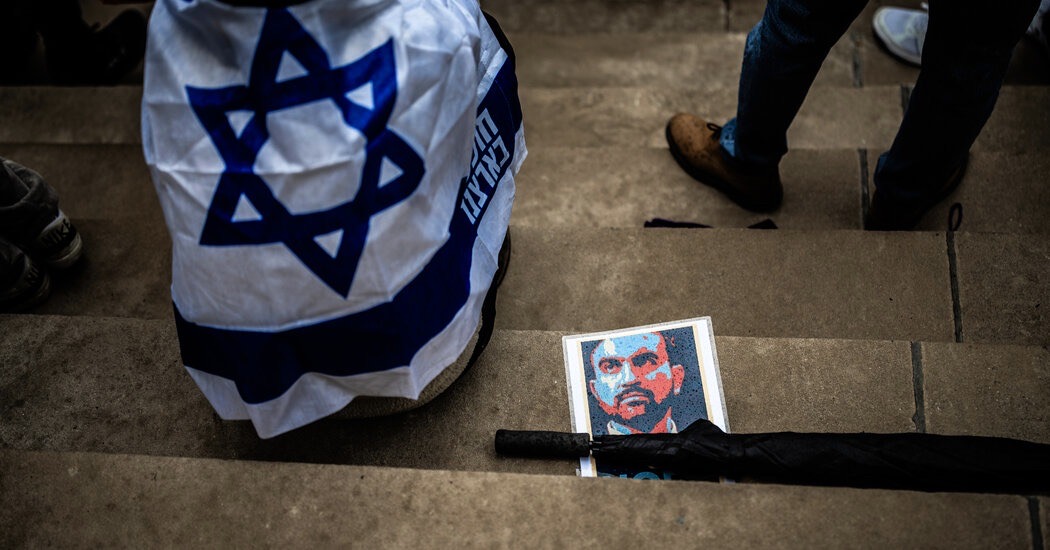
On November 19, Nefesh B’Nefesh, an organization that helps Jewish people make aliyah (immigration to Israel), held an open house at the Park East Synagogue in Manhattan. Outside, a group of around 200 people, organized by the anti-Israel organization Palestinian Assembly for Liberation-AWDA NY/NJ, gathered to protest the event.
A flyer distributed by the group read, “No settlers on stolen land” and “protest the settler recruiting fair,” references to the notion that Jewish people living in Israel are settler-colonizers. Many protesters were clad in keffiyehs, the Arab scarf symbolizing the anti-Israel cause, and carried signs with slogans like “We see you selling stolen land” and “Pedophiles & rapists are running our government to serve ‘Israel.’” Footage of the event captured protesters chanting, “Death, death to the IDF,” “From New York to Gaza, globalize the intifada,” and “Resistance, you make us proud, take another settler out.”
The level of vitriol caused many high-profile figures, both friendly and unfriendly toward Israel, to denounce the protest, including former New York City Mayor Eric Adams and New York Governor Kathy Hochul.
For Mamdani’s part, his spokesperson, Dora Pekec, stated, “The mayor-elect has discouraged the language used at last night’s protest and will continue to do so. He believes every New Yorker should be free to enter a house of worship without intimidation and that these sacred spaces should not be used to promote activities in violation of international law.”
The tepid statement not only failed to denounce the protest as unadulterated antisemitism, but it also took aim at those assembled peaceably within the synagogue by calling Nefesh B’Nefesh’s work a “violation of international law.”
Jewish Insider reported that when “asked to clarify the concluding caveat from Pekec’s statement, Mamdani’s team said it ‘was specifically in reference to the organization’s promotion of settlement activity beyond the Green Line,’ which ‘violates international law.’”
Prior to his election, more than 1,000 American rabbis signed a letter condemning Mamdani and others like him because they “refuse to condemn violent slogans, deny Israel’s legitimacy, and accuse the Jewish state of genocide,” which “‘delegitimize[s] the Jewish community and encourage[s] and exacerbate[s] hostility toward Judaism and Jews.’” Following Mamdani’s election, the encouragement and exacerbation of such hostilities began quickly.
On November 5, one day after the mayoral election, the Magen David Yeshiva in Brooklyn was defaced with two red swastikas. That same month, antisemitic graffiti—“[Expletive] Jews”—was found spray-painted on a Brooklyn sidewalk.
Later in November, at an interfaith event at New York City College, a Muslim imam, after extolling the virtues of Sharia law, denounced the director of a campus Jewish organization as a Zionist. He then led all of the Muslim students in attendance out of the room in protest.
Statistics for the month of January 2026 showed that murder and violent crimes across New York City decreased overall from the previous January. However, antisemitic incidents rose sharply, constituting a 182% increase from a year ago and highlighting the heightened danger Jewish New Yorkers face.
New York City long stood as a goldene medina—a golden land—where God’s chosen people could live freely, something rare anywhere else until Israel’s rebirth in 1948. Now, with the city led by a mayor hostile to the Jewish people and their ancestral homeland, recent events portend a troubling future for New York’s Jewish community.
