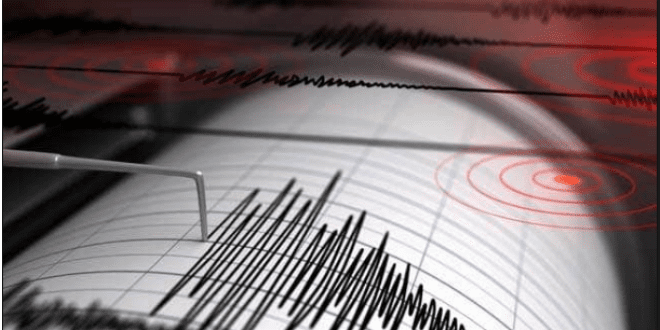
The ground shook in Iran on the first day of Ramadan — and it shook in a place that every Jew on earth knows by name. A magnitude 5.5 earthquake struck the Iranian province of Khuzestan on Thursday, hitting a region that sits atop one of the most prophetically charged pieces of real estate on the planet: ancient Shushan — the city of Esther, the city of Mordecai, the city where the Jewish people once came within a decree’s breadth of annihilation — and where God turned the tables on their would-be destroyers. That was 2,500 years ago. Purim is in ten days.
Shushan — known today as Susa, or Shush in Persian — is located in Khuzestan province in southwestern Iran, one of the oldest continually inhabited settlements on earth, with history stretching back approximately 7,000 years. It is the city that anchors the entire Purim story. It is where Haman, the Agagite, plotted the genocide of the Jewish people. It is where Esther risked her life before the king. It is where lots — purim — were cast to determine the date of Jewish destruction, and where those lots were ultimately turned against those who cast them. And now, on the eve of Purim 5785, the earth beneath Shushan shook.
The name of God does not appear once in the Book of Esther. That is not an oversight. The Sages teach that this concealment is itself the message: God works through hester panim — the hiding of the face — through what appears to be natural events, through timing that looks like coincidence until you step back and see the whole picture. The earthquake that just struck Shushan on the first day of Ramadan, ten days before Purim, is exactly the kind of event the Sages would recognize as the hand of the Ribono Shel Olam — the Master of the Universe — moving through nature itself.
But there is a second, deeper prophetic layer here, and it runs through Ezekiel.
Iran — ancient Paras, Persia — is explicitly named in the prophecy of Gog u’Magog, the great end-times war described in Ezekiel chapters 38 and 39. Hamon-gog (meaning “multitude of Gog”) is a symbolic valley mentioned in Ezekiel 39:11-15 where Gog and his vast armies will be buried following their failed invasion of Israel in the “latter years”. It signifies the final, divine destruction of enemies hostile to God’s people, often linked to end-times prophecy.The prophet lists Persia among the nations that will march against Israel in the final confrontation. And when God responds to that coalition, He does not send an army. He sends the earth itself.
“And I will punish him with pestilence and with bloodshed; and I will pour torrential rain, hailstones, and sulfurous fire upon him and his hordes and the many peoples with him.” (Ezekiel 38:22)
Ezekiel 38–39 describes Gog from the land of Magog leading a coalition to attack a restored Israel, only to be defeated by divine intervention. The valley, located east of the Dead Sea, will be used to bury the massive armies of Gog, with the cleansing of the land taking seven months. Hamon-gog represents the ultimate defeat of the forces opposing God, sometimes interpreted to include historical figures like Haman, from the Book of Esther, or other enemies.
Ezekiel is explicit: God fights the war of Gog u’Magog not through human military power but through the forces of nature — earthquake, fire, hailstones, and torrential rain. The name used throughout this passage is Elohim, the aspect of God associated with nature and with din — divine judgment. When Elohim acts in history, He acts through the natural world, and the natural world becomes His weapon.
Ezekiel 38:19 describes it with unmistakable force: a great earthquake will strike, and “the mountains shall be overthrown, cliffs shall topple, and every wall shall crumble to the ground.” The Sages teach that when God appears in the attribute of Elohim, He is the God of all creation — and all creation answers to Him.
Iran is building nuclear weapons. Iran funds Hamas terrorists, who murdered, raped, and burned their way through southern Israel on October 7. Iran funds Hezbollah. Iran funded the Houthis who fired missiles at Israeli cities. Iran, in every strategic sense, is already at war with Israel. And now the ground beneath ancient Shushan — the very city that symbolizes Persian hatred of the Jewish people and its ultimate, divine reversal — is shaking.
This is not geopolitics. This is Megillat Esther playing out in real time.
The Purim story does not end with Jewish suffering. It ends with the complete inversion of the decree: those who sought to destroy the Jews were destroyed themselves. V’nahafoch hu — “and it was turned upside down” (Esther 9:1). That phrase is the theological backbone of Purim. What is aimed at the Jewish people turns back on those who aim it. History rhymes. Prophecy echoes through facts on the ground — or in this case, the shaking of the ground itself.
The earthquake struck at a depth of 10 kilometers. The German Research Centre for Geosciences registered it at magnitude 5.5, with a 5.3 centered squarely in Khuzestan province — the province of Shushan. It struck on the first day of Ramadan, a detail that carries its own irony: the Muslim world begins its holy month while the Jewish world, ten days from now, will read the story of how the Persian empire’s attempt to destroy the Jews ended in the destruction of Haman and his ten sons.
Ten sons. Ten days. The Sages do not let these numbers pass without comment.
The prophets explicitly mention earthquakes and volcanoes as playing a role in the end of days, preparing the world by burning away impurities, as a crucible is used in metallurgy to purify metal.
But Hashem God is the true God, He is the living God, and the everlasting King; at His wrath the earth trembleth, and the nations are not able to abide His indignation. Jeremiah 10:10
The Prophet Ezekiel described earthquakes as preceding the pre-messiah multinational War of Gog and Magog.
Mountains shall be overthrown, cliffs shall topple, and every wall shall crumble to the ground. Ezekiel 38:20
Some rabbis have attributed this pre-Magog shake-up to God entering into the fray, using the forces of nature as his weapons of choice. Iran is considered a probable participant in the pre-Messiah War of Gog and Magog. The Zohar Chadash (Ruth 59) claims that earthquakes transpire when God gazes down at that specific part of the earth.
Whether or not this earthquake is a direct prophetic fulfillment, it is a signal — the kind of signal embedded in the fabric of Megillat Esther itself, where nothing is accidental and everything is hashgacha — divine providence working beneath the surface of events that look, to the uninitiated, merely like news.
Iran should take note. When the ground under Shushan shakes ten days before Purim, it is worth asking who, in this story, is playing Haman — and how that story ends.
